
Products
Services
Resources
Selection Guides
About
Bis-L-Aspartic acid Beta-rhodamine 110
Bis-L-Aspartic acid β-rhodamine 110 is a sensitive fluorogenic substrate for studying lysosomal glycoasparaginases (aspartylglucosaminidases) and L-asparaginases. It is used for the assays for lysosomal glycoasparaginase (aspartylglucosaminidase) activity and the diagnosis of aspartylglucosaminuria. Aspartylglucosaminidase is an amidohydrolase enzyme involved in the catabolism of N-linked oligosaccharides of glycoproteins. It cleaves asparagine from N-acetylglucosamines as one of the final steps in the lysosomal breakdown of glycoproteins. The lysosomal storage disease aspartylglycosaminuria is caused by a deficiency in the AGA enzyme.


| Catalog | Size | Price | Quantity |
|---|---|---|---|
| 13480 | 1 mg | Price |
Physical properties
| Molecular weight | 788.57 |
| Solvent | DMSO |
Spectral properties
| Extinction coefficient (cm -1 M -1) | 80000 |
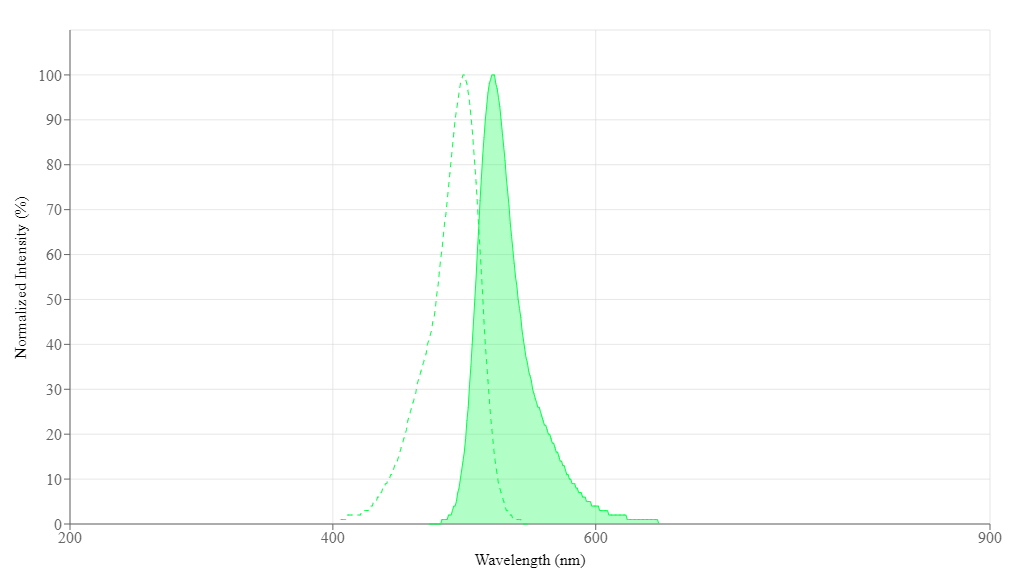
| Excitation (nm) | 500 |
| Emission (nm) | 522 |
Usage and storage
| Intended use | Research Use Only (RUO) |
| Storage | Freeze (< -15 °C); Minimize light exposure |
Contact us
| Telephone | |
| Fax | |
| sales@aatbio.com | |
| International | See distributors |
| Bulk request | Inquire |
| Custom size | Inquire |
| Technical support | Contact us |
| Request quotation | Request |
| Purchase order | Send to sales@aatbio.com |
| Shipping | Standard overnight for United States, inquire for international |
Page updated on October 23, 2026