
Products
Services
Resources
Selection Guides
About
ADME, P450 and Cytotoxicity
Cytochrome P450 (CYP450) enzymes are a superfamily of heme-containing monooxygenases that play central roles in drug metabolism, xenobiotic detoxification, and endogenous compound biosynthesis. Understanding CYP450 activity is critical for the metabolism and toxicity components of ADME studies in pharmaceutical development and toxicology research.
AAT Bioquest offers a comprehensive selection of fluorogenic P450 substrates for biochemical or cell-based enzyme activity assays, along with cytotoxicity assay kits for assessing compound effects on cell viability in ADME-Tox workflows. Our fluorogenic substrates feature excellent signal-to-background ratios and are compatible with high-throughput screening formats, while our Cell Meter™ cytotoxicity kits provide robust, no-wash protocols for cell viability assessment.
Product Category | Description | Detection |
|---|---|---|
P450 Fluorogenic Substrates | Coumarin and resorufin ethers for CYP450 activity monitoring | Fluorometric |
Cytotoxicity Assay Kits | Cell Meter™ kits for cell viability and cytotoxicity screening | Colorimetric, Fluorometric |
Fluorogenic substrates enable real-time monitoring of cytochrome P450 enzyme activity by releasing fluorescent products upon enzymatic cleavage. AAT Bioquest provides two major classes of P450 substrates: coumarin-based probes that release fluorescent 7-hydroxycoumarin derivatives, and resorufin ethers that generate the highly fluorescent resorufin chromophore (Ex/Em = 571/584 nm). These substrates are widely used in drug-drug interaction studies, enzyme kinetics, and high-throughput CYP inhibitor screening.
Coumarin ethers serve as classic CYP450 substrates where O-dealkylation by P450 enzymes releases fluorescent 7-hydroxycoumarin products. The cyano and trifluoromethyl substituents modulate substrate specificity for different CYP isoforms.
Resorufin ethers are highly sensitive P450 substrates that release the bright orange-red fluorescent resorufin (Ex/Em = 571/584 nm, ε = 65,000 M⁻¹cm⁻¹) upon O-dealkylation. The alkyl chain length (methyl, ethyl, pentyl, or benzyl) determines isoform selectivity, with shorter chains generally favoring CYP1A and longer chains showing broader CYP specificity.
Cell viability and cytotoxicity assessment are essential components of ADME-Tox studies, drug safety evaluation, and compound screening. AAT Bioquest's Cell Meter™ cytotoxicity assay kits offer sensitive, homogeneous detection of viable cells without the need for wash steps. These kits are compatible with both adherent and suspension cells and can be performed in 96-well or 384-well microplate formats for high-throughput applications. Compared to traditional tetrazolium-based assays (MTT, XTT, WST-8), these proprietary reagents can provide improved sensitivity and enable extended incubation times (24–48 hours) in many cell types, with reduced assay-induced cytotoxicity.
Fig. 1
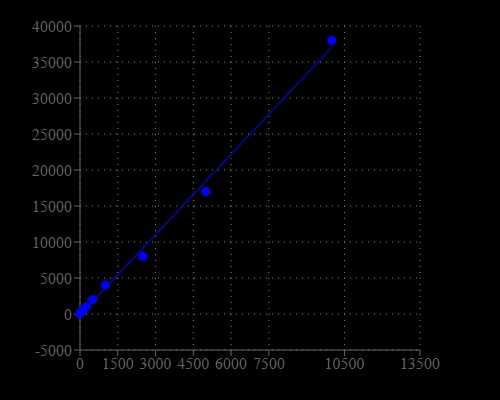
CHO-K1 cell number response was measured with Cell Meter™ Fluorimetric Cell Cytotoxicity Assay Kit. CHO-K1 cells at 0 to 10,000 cells/well/100 µL were seeded overnight in a Costar black wall/clear bottom 96-well plate. The cells were incubated with 20 µL/well of Assay Solution (Component A) for 3 hours at 37°C. The fluorescence intensity was measured at Ex/Em = 540/590 nm (Cutoff = 570 nm) with NOVOstar instrument (BMG Labtech). The fluorescence intensity was linear (R2 = 0.998) to the cell number as indicated.
This document (01.0229.251203r1) was last updated on Sat Feb 28 2026. All trademarks and registered trademarks mentioned herein are the property of their respective owners.