
Products
Services
Resources
Selection Guides
About
Other HTS Assays
AAT Bioquest offers a focused collection of specialized high-throughput screening (HTS) assays designed for studying diverse cellular processes beyond traditional ion channel and receptor screening. These kits address key research areas including GPCR signaling, metabolic function, membrane potential dynamics, and antimicrobial resistance mechanisms. Each assay is optimized for microplate-based workflows with robust signal-to-background ratios suitable for compound screening and functional studies.
G protein-coupled receptors (GPCRs) undergo rapid desensitization upon ligand binding through a conserved pathway involving beta-arrestin recruitment. The Cell Meter™ Beta-Arrestin Translocation Kit provides a robust platform for monitoring GPCR activation by tracking GFP-tagged beta-arrestin translocation from the cytoplasm to the plasma membrane, enabling quantitative assessment of receptor-ligand interactions.
- Direct visualization of beta-arrestin recruitment to activated GPCRs
- GFP-based detection compatible with standard fluorescence microscopy and plate readers
- Real-time kinetics measurement of receptor desensitization
- Broad compatibility applicable to virtually all GPCR subtypes
Fig. 1
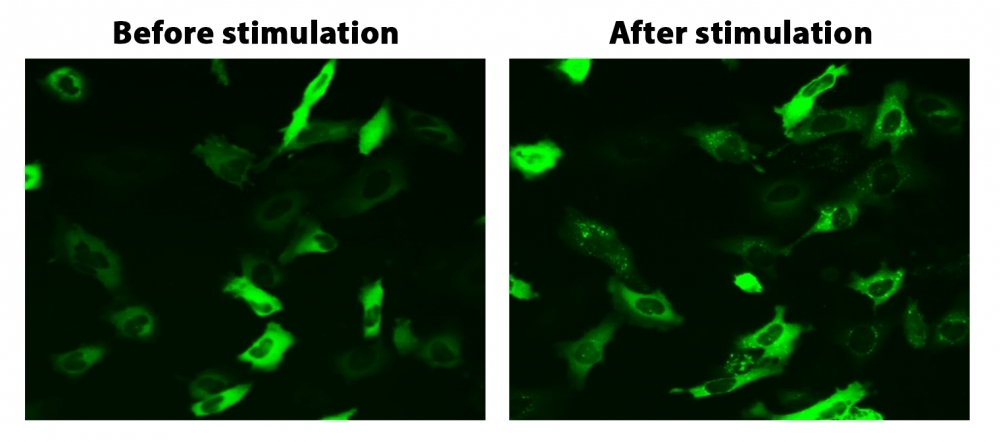
Translocation of beta-arrestin in HeLa cells. HeLa cells were transiently transfected with beta-arrestin-GFP and vasopressin receptor 2 (V2R). HeLa cells were cultured in a 6-well plate and grown to ~60% confluence. Equal amounts of beta-arrestin-GFP (1.5 µg) and V2R plasmids (1.5 µg) were transfected with 9 µL of Transfectamine™ 5000. Cells were transferred to a 96-well plate ~ 30 hours after transfection. Vasopressin (1 µM) was added to the cells ~ 48 hours after transfection to induce beta-arrestin-GFP translocation. Images were taken before and 2 hours after the vasopressin treatment under a fluorescent microscope using the FITC channel.
Membrane potential is the voltage difference between cellular interior and exterior, functioning as a cellular battery that regulates numerous physiological processes. These Screen Quest™ kits utilize voltage-sensitive fluorescent dyes that redistribute across the membrane in response to potential changes, providing real-time readouts for ion channel screening and electrophysiology studies.
- Excellent signal-to-background ratios with voltage-sensitive dyes
- Multiple color options with orange and red fluorescence to minimize autofluorescence interference
- Flexible readout modes compatible with kinetic and endpoint measurements
Beta-lactamase enzymes produced by bacteria confer resistance to beta-lactam antibiotics, representing a major public health challenge. The ScreenQuest™ Beta-Lactamase Inhibitor Screening Kit enables high-throughput identification of novel inhibitors by providing accurate quantification of beta-lactamase activity using a chromogenic substrate.
- Sensitive colorimetric detection of beta-lactamase activity
- HTS-optimized format for 96-well screening plates
- Quantitative measurements enabling dose-response characterization
- Antimicrobial focus supporting resistance research and inhibitor discovery
Fig. 2
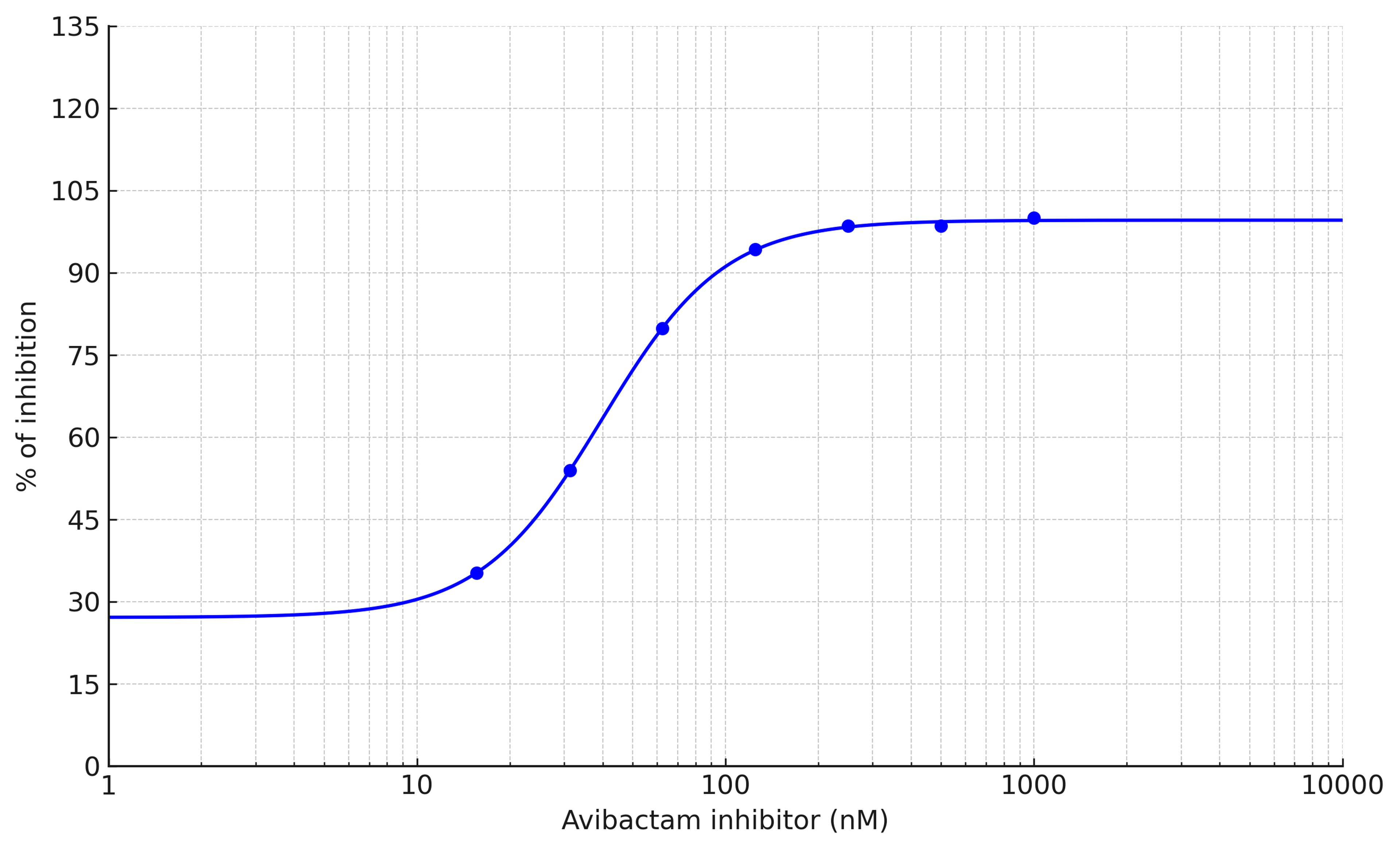
Avibactam dose response was measured with Screen Quest™ Beta-Lactamase Inhibitor Screening Kit (Catalog Number 11333) on a 96-well clear bottom plate using a SpectraMax reader (Molecular Devices).
This document (01.0276.251203r1) was last updated on Sat Feb 28 2026. All trademarks and registered trademarks mentioned herein are the property of their respective owners.