
Products
Services
Resources
Selection Guides
About
Reactive Rhodamines
Rhodamines are xanthene derivatives structurally related to fluorescein, but with additional chemical substitutions that shift their excitation and emission spectra to longer wavelengths. The most widely used rhodamines include rhodamine 110, the parent rhodamine, tetramethylrhodamine (such as TAMRA or TRITC) and X-rhodamines (such as Texas Red®). In comparison to coumarins and cyanines, the fluorescence of rhodamines are generally more resistant to photodegradation and less sensitive to pH changes. However, rhodamine conjugates are particularly susceptible to self-quenching. When more than two or three fluorophores are covalently attached to a target molecule, such as an antibody or nucleic acid, there is considerable loss in fluorescence.
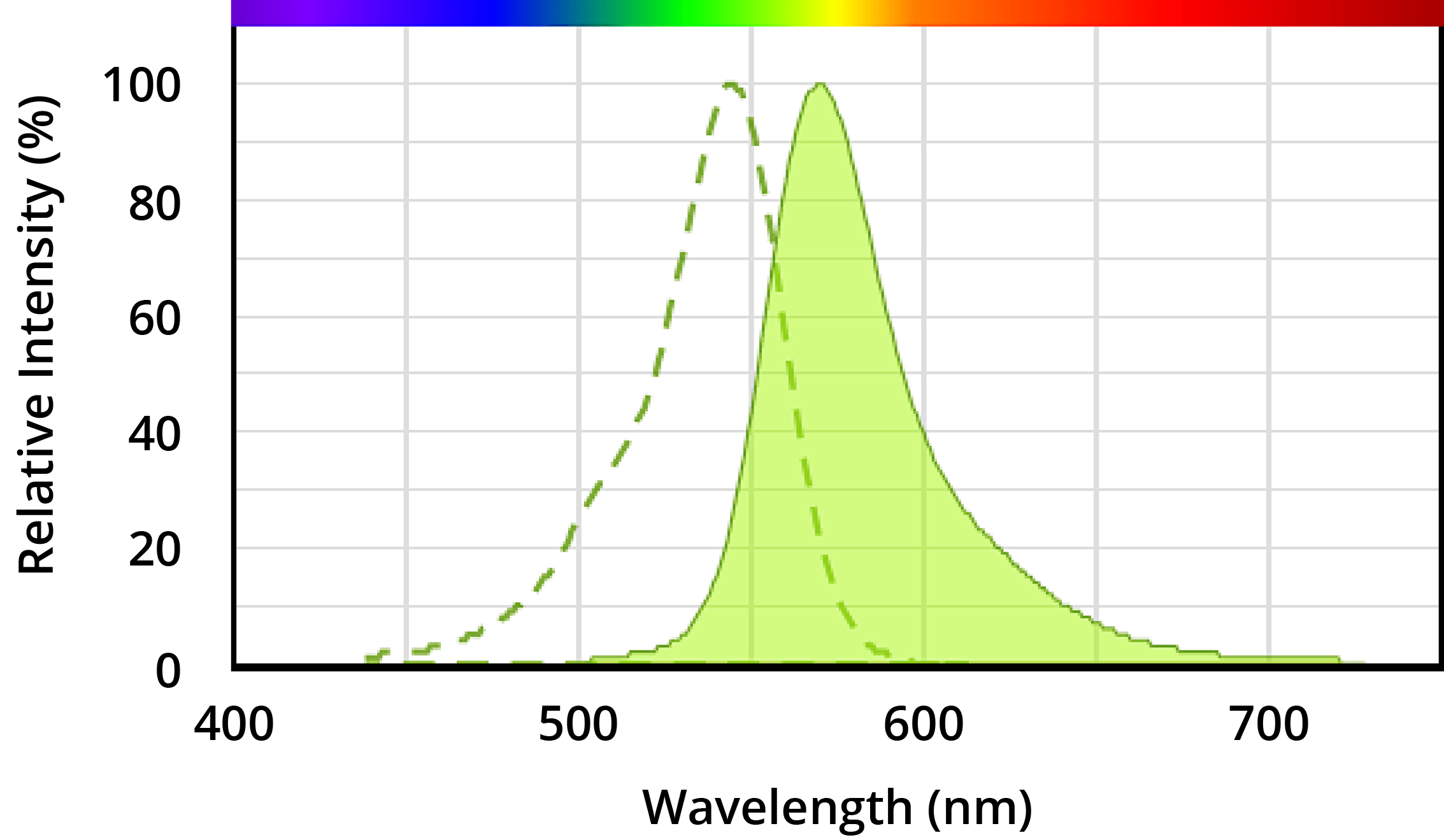
Reactive rhodamines and rhodamine derivatives are widely used to covalently label biomolecules such as antibodies, carbohydrates, nucleic acids, proteins, peptides, and oligonucleotides, resulting in bright orange fluorescence. Rhodamine conjugates are often used as substrates for detecting enzymatic activity or to provide contrast in multicolor fluorescence investigations when combined with blue, green, or far-red fluorescent probes. Rhodamine and rhodamine derivatives are available in a variety of dye-labeling chemistries.
The iFluor® 555 dye, which is spectrally similar to Cy3®, TRITC and Alexa Fluor® 555, produces brighter and more photostable conjugates with reduced pH sensitivity over a wide molar range (approximately pH 3–11). Ideal for imaging low-abundance targets with greater sensitivity, iFluor® 555 dye molecules can be conjugated to biomolecules, in particular antibodies and proteins, at high molar ratios with minimal self-quenching. These conjugates are well suited for imaging and are particularly useful in multicolor applications, such as flow cytometry and fluorescence microscopy, without compromising the performance of blue and far-red fluorescent probes.
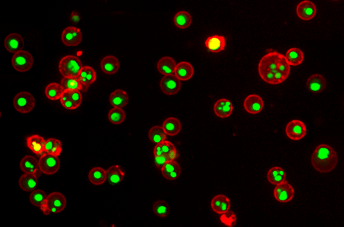
iFluor® 555™ dyes are readily available in a variety of reactive dye forms and protein labeling kits allowing you to easily produce antibody conjugates or probes in-house. Also available are iFluor® 555 dyes conjugated to antibodies, annexin V, phalloidin, amplification substrates (e.g. labeled-tyramides, labeled-styramides) and other biomolecules for cellular imaging and detection assays requiring increased sensitivity.
This document (01.0091.211015r2) was last updated on Sat Feb 28 2026. All trademarks and registered trademarks mentioned herein are the property of their respective owners.