
Products
Services
Resources
Selection Guides
About
Other Hydrolysis Enzymes
AAT Bioquest offers a comprehensive selection of substrates and assay kits for measuring the activity of diverse hydrolysis enzymes beyond the common phosphatase, protease, and nuclease categories. This collection includes reagents for detecting ATPases, GTPases, cholinesterases, lactamases, neuraminidases, and sphingomyelinases. The Amplite® and PhosphoWorks™ assay platforms provide optimized, ready-to-use kits with enhanced sensitivity for both fluorimetric and colorimetric detection, while individual fluorogenic and chromogenic substrates offer flexibility for custom assay development.
Enzyme Category | Best For | Example Products |
|---|---|---|
ATPases and GTPases | Phosphate/pyrophosphate release assays | PhosphoWorks™ Phosphate Kits |
Cholinesterases | Neuroscience, toxicology, drug screening | Amplite® AChE/BChE Kits |
Beta-Lactamases | Antibiotic resistance, inhibitor screening | Amplite® & ScreenQuest™ Kits |
Neuraminidases | Sialic acid metabolism, viral research | Amplite® Neuraminidase Kit |
Sphingomyelinases | Lipid metabolism, membrane signaling | Amplite® SMase Kits |
ATPases and GTPases are phosphoanhydride hydrolases that catalyze ATP or GTP hydrolysis, releasing inorganic phosphate (Pi) or pyrophosphate (PPi) as reaction products. These enzymes are involved in critical cellular processes including active transport, signal transduction, cytoskeletal dynamics, and protein synthesis. Monitoring phosphate or pyrophosphate release provides a direct, universal method for measuring ATPase and GTPase activity without the need for specialized substrates.
- PhosphoWorks™ phosphate assays detect inorganic phosphate released during ATP/GTP hydrolysis
- Multiple detection formats: colorimetric (malachite green or MESG-based) and fluorimetric (red fluorescence)
- Pyrophosphate assays enable detection of PPi from ATP hydrolysis, DNA/RNA polymerization, and adenylate cyclase activity
- Compatible with purified enzymes, cell lysates, and membrane preparations
Cholinesterases are critical enzymes in neurotransmission that hydrolyze acetylcholine to terminate synaptic signaling. Acetylcholinesterase (AChE) is predominantly found at neuromuscular junctions and in the brain, while butyrylcholinesterase (BChE) is synthesized in the liver and circulates in plasma. These enzymes are important targets for Alzheimer's disease therapeutics and are inhibited by organophosphate pesticides and nerve agents, making activity assays essential for drug development and toxicology studies.
- Multiple detection formats (colorimetric, green fluorescence, red fluorescence) for instrument flexibility
- Amplite® optimized chemistry delivers enhanced signal-to-noise ratios
- SunRed™ Acetate substrate enables far-red detection (Ex/Em = 653/661 nm) compatible with 633 nm laser excitation
- Microplate-ready formats suitable for high-throughput screening
Fig. 1
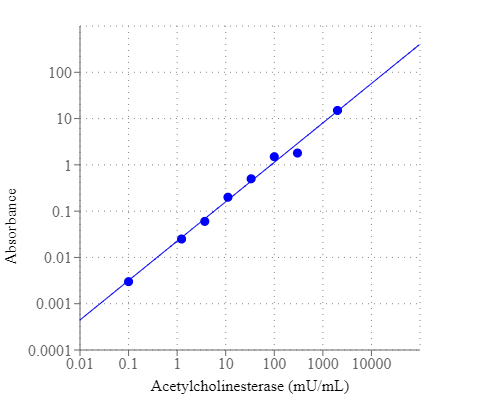
Acetylcholinesterase dose response was measured in a white/clear bottom 96-well plate with Amplite® Colorimetric Acetylcholinesterase Assay Kit using a SpectraMax microplate reader (Molecular devices). As low as 0.1 mU/well of Acetylcholinesterase can be detected with 30 minutes incubation(n=3).
Beta-lactamases are bacterial enzymes that hydrolyze the beta-lactam ring found in penicillin, cephalosporin, and carbapenem antibiotics, representing a major mechanism of antibiotic resistance. Detecting beta-lactamase activity and screening for inhibitors are critical for antibiotic resistance research and drug development programs. Our optimized kits support both direct activity measurement and high-throughput inhibitor screening applications.
- Amplite® Colorimetric Kit enables direct activity measurement in bacterial extracts
- ScreenQuest™ Inhibitor Screening Kit optimized for high-throughput compound screening
- Microplate-compatible formats support automated screening workflows
Neuraminidases (sialidases) cleave terminal sialic acid residues from glycoproteins, glycolipids, and oligosaccharides. These enzymes play important roles in viral infection (influenza neuraminidase), bacterial pathogenesis, and mammalian lysosomal function. Neuraminidase inhibitors such as oseltamivir (Tamiflu) are important antiviral therapeutics, making neuraminidase activity assays valuable for drug discovery and viral research.
- Fluorimetric detection with blue fluorescence readout
- Compatible with viral, bacterial, and mammalian neuraminidases
- Suitable for inhibitor screening applications
Fig. 2
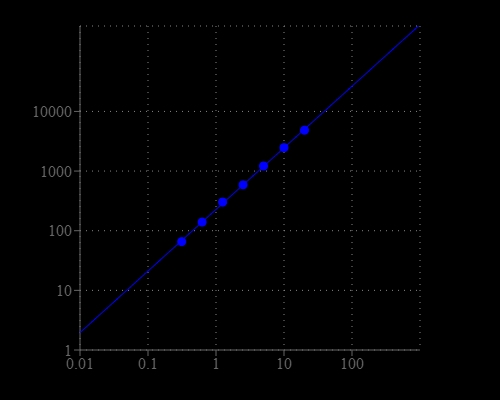
Neuraminidase dose response was measured in a 96-well black plate with Amplite® Fluorimetric Neuraminidase Assay Kit using a Gemini fluorescence microplate reader (Molecular Devices).
Sphingomyelinases (SMases) cleave sphingomyelin to produce ceramide and phosphocholine. Different isoforms are classified by pH optima (acidic, neutral) and cation dependence. These enzymes are implicated in membrane signaling, apoptosis, and various disease states including Niemann-Pick disease. Sphingomyelinase activity assays are important tools for studying lipid metabolism and sphingolipid signaling pathways.
- Assays available for both general sphingomyelinase and acidic sphingomyelinase (ASMase) specifically
- Colorimetric and fluorimetric detection formats
- Red fluorescence readout (571/584 nm) minimizes interference from biological samples
This document (01.0265.251203r1) was last updated on Sat Feb 28 2026. All trademarks and registered trademarks mentioned herein are the property of their respective owners.
Other Hydrolysis Enzymes