
Products
Services
Resources
Selection Guides
About
iFluor® 488 Anti-human/ dog CD132 Antibody
TUGh4
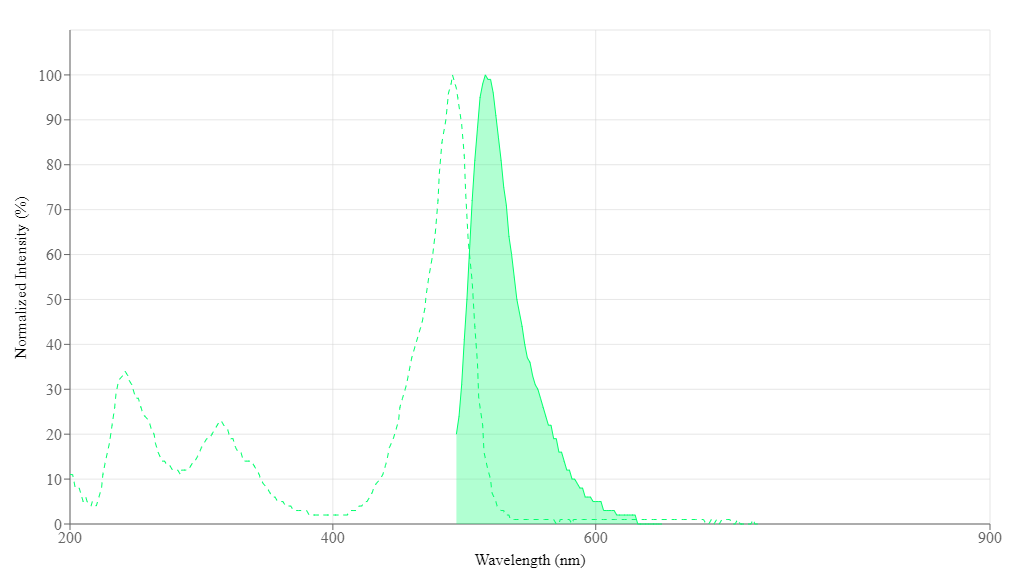
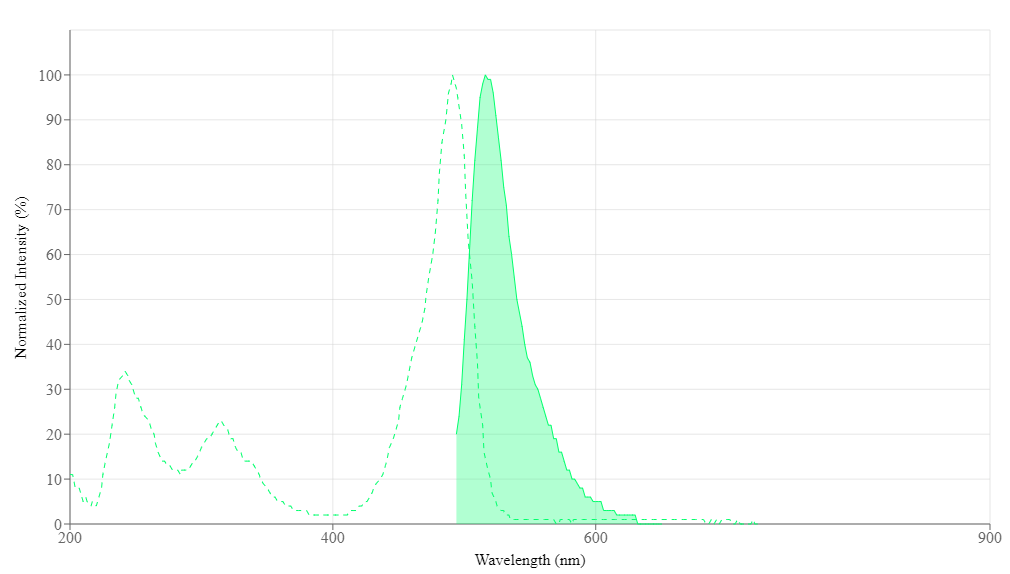
The TUGh4 monoclonal antibody binds to human/ dog CD132, a 64 - 70 kD member of the Ig superfamily frequently located on the surface of macrophages and B cells. CD132 is a component of important cellular pathways, namely, the interleukin-21-mediated signaling pathway, interleukin-9-mediated signaling pathway and interleukin-2-mediated signaling pathway. In addition, in certain organisms, it is an enhancer of phagocytosis. From a research standpoint, it is of biological interest due to its association with important macromolecules/ligands such as CD124, JAK1, CD25 and lck. CD132 is a relatively rare antibody target, with fewer than 800 publications in the last decade. Even still, CD132 has a variety of applications in immunology research, frequently serving as a phenotypic marker for differentiating cell types in flow cytometric applications. This antibody was purified through affinity chromatography and conjugated to iFluor® 488 (ex/em = 491/516 nm). It is compatible with the 488 nm laser and 512/18 nm bandpass filter (for example, as in the Luminex Guava easyCyte).


| Catalog | Size | Price | Quantity |
|---|---|---|---|
| 11320050 | 100 tests | Price | |
| 11320051 | 500 tests | Price |
Antibody properties
| Other names | Common γ chain |
| Clone | TUGh4 |
| Host | Rat |
| Isotype | IgG2b, kappa |
| Reactivity | Human, Dog |
| Application | Flow Cytometry (FACS), Fluorescence Imaging |
Spectral properties
| Correction factor (260 nm) | 0.21 |
| Correction factor (280 nm) | 0.11 |
| Extinction coefficient (cm -1 M -1) | 75000 1 |
| Excitation (nm) | 491 |
| Emission (nm) | 516 |
| Quantum yield | 0.9 1 |
Usage and storage
| Intended use | Research Use Only (RUO) |
Contact us
| Telephone | |
| Fax | |
| sales@aatbio.com | |
| International | See distributors |
| Bulk request | Inquire |
| Custom size | Inquire |
| Technical Support | Contact us |
| Request quotation | Request |
| Purchase order | Send to sales@aatbio.com |
| Shipping | Standard overnight for United States, inquire for international |
Page updated on August 19, 2026