
Products
Services
Resources
Selection Guides
About
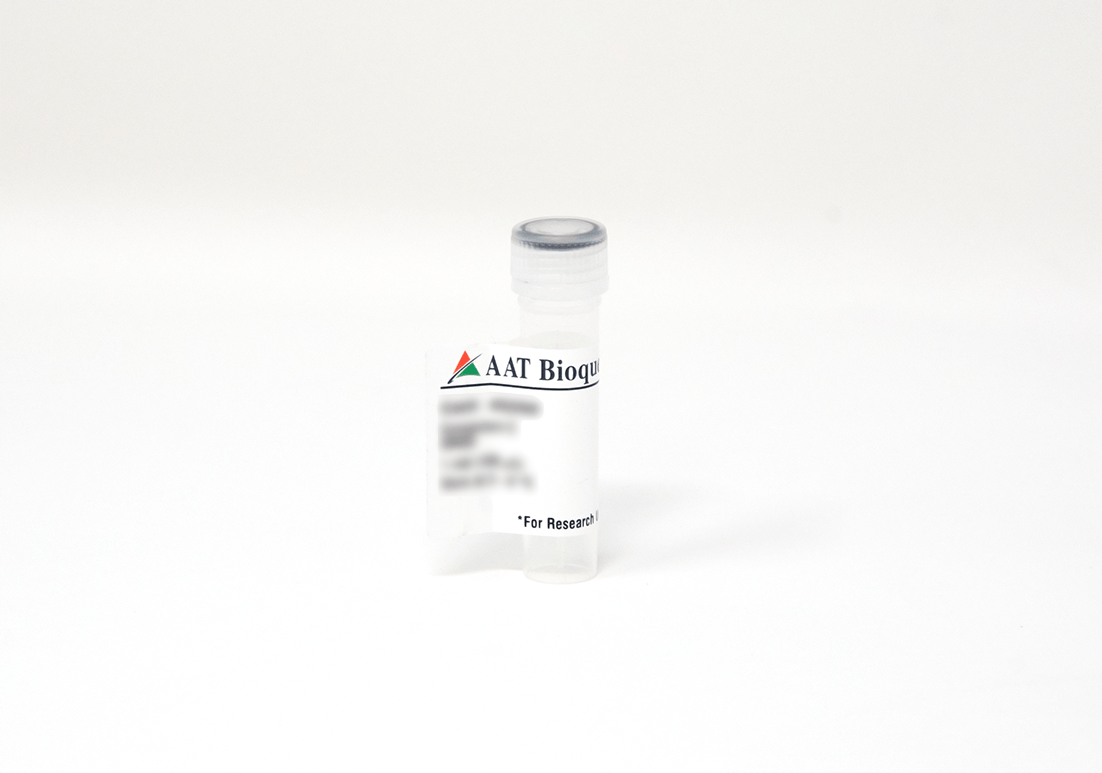
Purified Low Endotoxin Mouse Anti-human DLL4 Antibody
MHD4-46, monoclonal
δ-like protein 4 is a 75 kDa transmembrane protein that can be expressed in the integral component of membrane and plasma membrane of cells. In humans, δ-like protein 4 acts to positively regulate neural precursor cell proliferation and gene expression. It also is an inhibitor of transcription by RNA polymerase II, gene expression and endothelial cell migration. Sequencing of δ-like protein 4 has demonstrated it contains 11 conserved structural units: EGF-like 1, EGF-like 2, EGF-like 3, EGF-like 4, EGF-like 5, EGF-like 6, EGF-like 7, EGF-like 8, DSL, cytoplasmic, and extracellular domain. δ-like protein 4 plays an important role in organismal processes, namely, branching involved in blood vessel morphogenesis, dorsal aorta morphogenesis and aortic valve morphogenesis. It is the subject of intensive study stemming from the fact that it is involved with the negative regulation of Notch signaling pathway and positive regulation of Notch signaling pathway, and in addition, reacts with calcium ion and Notch. δ-like protein 4 takes part in processes such as neural retina development and neurogenesis. Mutations and abnormalities in δ-like protein 4 have been thought to be involved with a number of diseases, for example, Adams-Oliver syndrome 6 (AOS6). Adams-Oliver syndrome 6, an autosomal dominant inheritancedisorder characterized by the congenital absence of skin (aplasia cutis congenita) in combination with transverse limb defects, has in particular been of interest to investigators.

| Catalog | Size | Price | Quantity |
|---|---|---|---|
| V103585 | 0.1 mg | Price |
Antibody properties
| Clone | MHD4-46 |
| Host | Mouse |
| Reactivity | Human |
| Application | Flow Cytometry (FACS), FUNC |
Usage and storage
| Intended use | Research Use Only (RUO) |
Contact us
| Telephone | |
| Fax | |
| sales@aatbio.com | |
| International | See distributors |
| Bulk request | Inquire |
| Custom size | Inquire |
| Technical Support | Contact us |
| Request quotation | Request |
| Purchase order | Send to sales@aatbio.com |
| Shipping | Standard overnight for United States, inquire for international |
Page updated on August 20, 2026