
Products
Services
Resources
Selection Guides
About
Peroxidase (HRP)
Peroxidases are a class of enzymes that catalyze the oxidation of various organic and inorganic substrates. One of the most well-established, perhaps, is horseradish peroxidase (HRP). HRP is a robust ~40 kDa enzyme widely employed as a label in ELISA, immunoassays, Western blotting, and immunohistochemistry applications. HRP catalyzes the hydrogen peroxide-dependent oxidation of chromogenic and fluorogenic substrates to generate quantitative absorbance or fluorescence signals, respectively; luminol-based chemiluminescent reagents are also commonly used. AAT Bioquest's offers a complete selection of peroxidase activity assay kits, substrates, and related reagents, such as stop solutions, for a diverse range of applications and instrument platforms.
The Amplite® product line offers complete, ready-to-use assay kits designed for direct quantification of peroxidase enzyme activity and characterization of peroxidase-conjugated detection reagents. Each kit includes optimized buffers, hydrogen peroxide, substrates, and stopping solutions in stoichiometric ratios to maximize accuracy and reproducibility. The kits are available in colorimetric, fluorimetric, and luminometric formats with performance validated across standard 96-well and 384-well microplate platforms.
- Multi-format options: Colorimetric, fluorimetric (red and NIR), and luminometric detection
- Quantitative performance: Excellent linear range with low background
- High-throughput compatible: Optimized protocols for 96-well and 384-well plates
Catalase is a common antioxidant heme-containing redox enzyme found in nearly all living organisms exposed to oxygen. The enzyme is concentrated in peroxisome subcellular organelles and plays a critical role in preventing the excessive buildup of hydrogen peroxide, a toxic product of normal aerobic metabolism and pathogenic ROS production. By catalyzing the decomposition of H₂O₂ to water and oxygen, catalase protects cells from oxidative damage.
Amplite® Fluorimetric Catalase Assay Kit provides a quick and sensitive method for measuring catalase activity. The assay uses Amplite® Red substrate, which reacts with H₂O₂ to generate a red fluorescent product. The reduction in fluorescence intensity is proportional to catalase activity. The kit can detect as little as 30 mU/mL catalase in a 100 µL reaction volume.
Glutathione peroxidase (GPx) is an enzyme family with peroxidase activity that protects organisms from oxidative damage. GPx catalyzes the reduction of hydrogen peroxide and organic hydroperoxides to their corresponding alcohols using glutathione (GSH) as a reducing agent. Altered glutathione peroxidase levels correlate with many diseases including cancer, diabetes, and cardiovascular conditions.
Amplite® Fluorimetric Glutathione Peroxidase Assay Kit measures GPx activity through a coupled enzymatic reaction. GSH is oxidized to GSSG by GPx, then recycled by glutathione reductase and NADPH. The generated NADP⁺ is detected using Quest Fluor™ NADP sensor, enabling detection of as little as 1.25 mU/mL glutathione peroxidase.
Myeloperoxidase (MPO) is a green hemoprotein most abundantly present in neutrophils and monocytes. This 150 kDa dimeric enzyme catalyzes the reaction of hydrogen peroxide with halide ions to form cytotoxic acids and intermediates, playing an important role in the oxygen-dependent killing of tumor cells and microorganisms. MPO is a sensitive biomarker for neutrophil activation and inflammatory response.
Amplite® Fluorimetric Myeloperoxidase Assay Kit uses Amplite® Red substrate for dual-mode detection (fluorimetric or colorimetric). The kit can detect as little as 0.1 mU/mL myeloperoxidase and is suitable for high-throughput screening of MPO inhibitors.
Amplite® fluorogenic HRP substrates exploit the enzyme's peroxidase activity to generate bright fluorescent products through H₂O₂-dependent oxidation of non-fluorescent precursors. These fluorogenic substrates provide substantially higher analytical sensitivity than traditional colorimetric substrates such as TMB or ABTS when used with appropriate fluorescence detection instrumentation, supporting detection of low-abundance targets in microplate-based assays. Fluorimetric detection additionally provides superior specificity by minimizing spectral interference from colored samples and cellular autofluorescence.
- Amplite® ADHP (Red Fluorescence): Equivalent to Amplex Red with Ex/Em = 571/584 nm; highly sensitive with low background noise
- Amplite® IR (Near-Infrared): Ex/Em = 648/668 nm for reduced autofluorescence in complex biological matrices
- Superior signal-to-noise ratio: Fluorescence eliminates color interference from hemoglobin, melanin, and bilirubin
- Kinetic flexibility: Compatible with both endpoint and kinetic assay formats
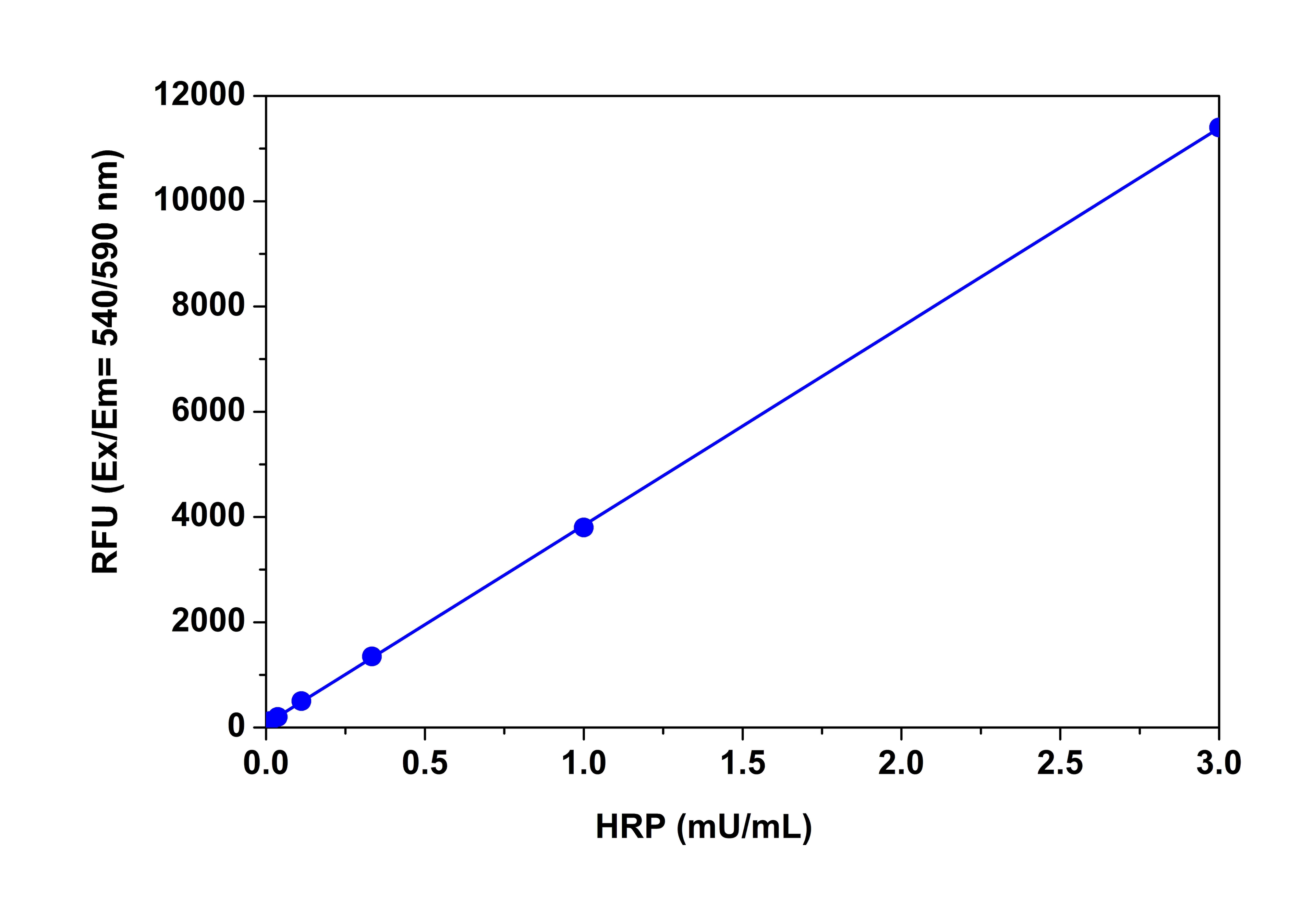
ReadiUse™ and Amplite® colorimetric HRP substrates are pre-formulated, ready-to-use solutions optimized for standard ELISA and microplate assays with absorbance-based detection. TMB and ABTS remain widely used colorimetric substrates in research and industrial screening assays due to their well-characterized kinetics, established buffering conditions, and cost-effectiveness.
- Ready-to-use formulations: No buffer preparation or substrate dissolution required
- Pre-optimized conditions: Calibrated pH, H₂O₂ concentration, and enzyme kinetics
- TMB substrate: Higher sensitivity with distinctive blue (650 nm) or yellow (450 nm after acid stop) color development
- ABTS substrate: Blue-green product (405 nm), slower kinetics but improved stability with less background drift
Chemiluminescent HRP substrates generate light through enzymatic H₂O₂-dependent oxidation of luminol derivatives, achieving femtogram-level protein detection sensitivity ideal for Western blotting and immunodetection applications. Enhanced luminol substrates such as Amplite® West ECL deliver extended signal duration and improved kinetics compared to first-generation luminol formulations, enabling multiple film exposures or prolonged digital imaging without signal decay.
- Femtogram sensitivity: Detects extremely low-abundance proteins and post-translational modifications
- Extended signal duration: Stable light emission enables optimized exposure times and repeated imaging
- Amplite® West ECL: Superior kinetics and reduced background chemiluminescence
- Compatible detection systems: Works with X-ray film, CCD cameras, and digital imaging platforms
Stayright™ Purple is an HRP chromogen that produces a stable purple precipitate with high contrast for immunohistochemical detection. It is a safer alternative to the standard brown DAB-based staining, which has been shown to be mutagenic and hazardous to laboratory workers and the environment. Stayright™ Purple is optimized for immunohistochemical detection in formalin-fixed paraffin-embedded (FFPE) tissue sections and multiplex applications where signal stability and color differentiation are critical.
- Strong, non-fading signal: Maintains color intensity and histological detail over time without photobleaching
- Superior contrast: Vibrant purple color provides excellent visibility with standard light microscopy
- Tissue compatibility: Works optimally with formalin fixation and paraffin embedding protocols
- Ready-to-use formulation: Pre-mixed with H₂O₂, eliminates preparation variability
In addition to substrates and activity assay kits, AAT Bioquest offers essential supporting reagents for development, optimization, and execution of HRP-based assays, including purified enzyme for protein conjugation, stabilized hydrogen peroxide substrate solutions, rapid reaction-stopping reagents, and signal amplification boosters. These components are critical for achieving reproducible assay performance and implementing advanced detection strategies.
- Signal Guard™ Stopping Solutions: Instantaneously arrest HRP enzymatic reactions while preserving signal stability and preventing background drift
- ReadiUse™ H₂O₂ Solution: Calibrated 50 mM H₂O₂ at physiological pH with shelf-life optimization for consistent substrate delivery
- Amplite® TSA Booster: Tyramide signal amplification (TSA) for enhanced sensitivity in immunohistochemistry and in situ hybridization
Fig. 2
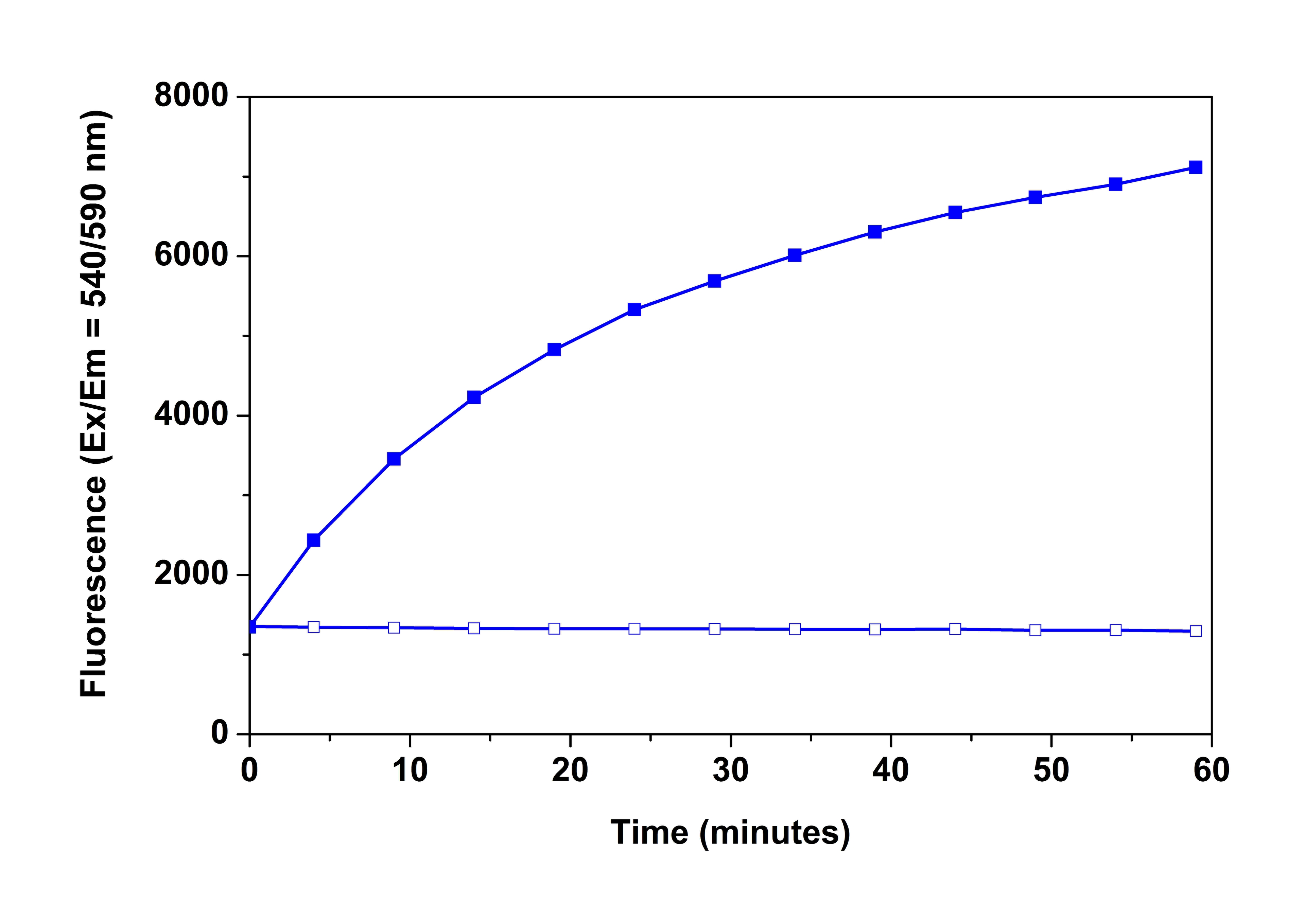
Application of Signal Guard™ HRP Reaction Stopping Solution (Catalog Number 11020) on HRP coupled glucose detection reaction. Reactions were incubated at room temperature for 5 minutes and then 20 µL 1X stop reagent was added, and the reaction was completely inhibited by Signal Guard™ HRP Reaction Stopping Solution.
This document (01.0257.251203r1) was last updated on Sat Feb 28 2026. All trademarks and registered trademarks mentioned herein are the property of their respective owners.